
What Is a CCTV Security System and How Does It Work
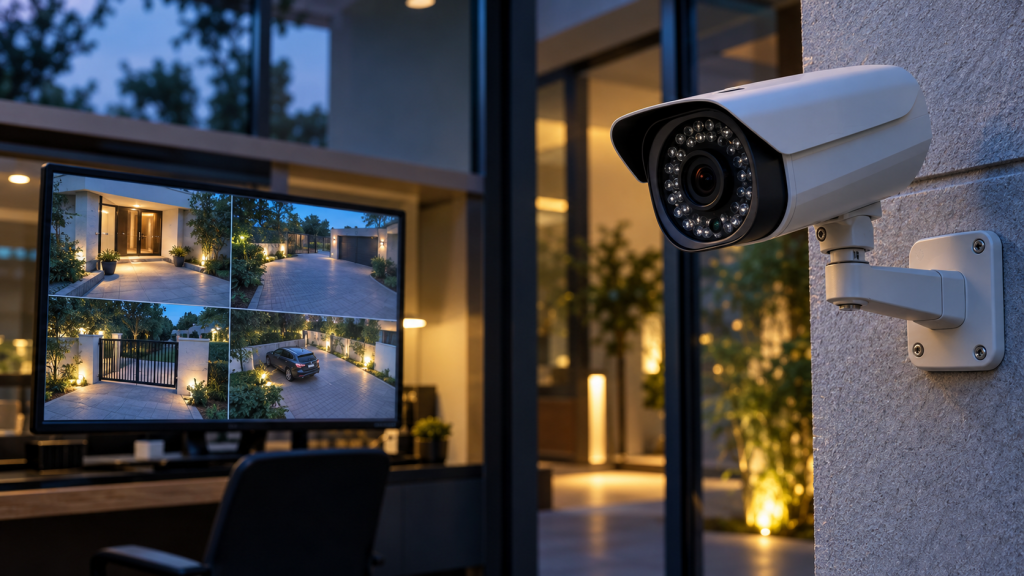
CCTV stands for closed-circuit television. The closed-circuit part distinguishes it from broadcast television, where signals transmit openly to anyone with a receiver. A CCTV system transmits video signals through a closed loop that connects cameras to a specific set of monitors and recording devices rather than broadcasting to an open network. Only the equipment and people within that closed circuit can access the footage the system captures.
That basic definition describes the original analog CCTV technology that became the standard for commercial and industrial security installations starting in the 1970s. The term has since expanded in common usage to cover a broader range of video surveillance systems including modern IP-based camera networks that operate on fundamentally different technology. Most people use CCTV as a general term for any fixed security camera system regardless of whether the underlying technology is analog or digital. Understanding the distinction matters when evaluating what a property actually needs rather than simply requesting a CCTV system and assuming all options deliver the same result.
The Core Components of a CCTV Security System
A CCTV security system combines several distinct hardware components that work together to capture, transmit, store, and display video footage. Each component plays a specific role and the performance of the complete system depends on how well each one is specified for the property’s actual requirements.
Cameras
The cameras are the most visible part of any CCTV system and the component that determines what the system can actually capture. Camera selection involves several specifications that directly affect the footage’s usefulness when a security incident occurs.
Resolution determines the level of detail the camera captures at a given distance. Standard definition analog cameras produce footage where faces and license plates are difficult to identify beyond short distances. High definition cameras produce significantly more detail at the distances that commercial properties require for useful identification footage. The difference between a camera that confirms someone was present and one that identifies who that person was comes down to resolution matched correctly to the coverage distance.
Lens field of view determines how wide an area a single camera covers. Wide angle lenses capture more area but reduce the detail at any specific point within the frame. Narrow lenses capture less area but more detail at distance. A camera covering a parking lot needs a different lens specification than one covering a narrow corridor, and using the same camera specification throughout an installation regardless of what each position needs to capture produces adequate footage in neither location.
Low-light performance determines whether the camera captures usable footage after dark. Infrared illumination extends visibility in complete darkness but produces black and white footage. Low-light color sensors maintain color imaging in minimal ambient light. Cameras without adequate low-light capability produce footage of limited investigative value during the overnight hours when unauthorized access attempts most commonly occur.
Recording Equipment
Analog CCTV systems use a Digital Video Recorder, commonly called a DVR, to receive video signals from cameras, compress that video data, and store it on internal hard drives. The DVR connects directly to cameras through coaxial cable runs, processes the incoming video signals, and manages the recording schedule and storage allocation across its connected camera channels.
IP camera systems use a Network Video Recorder, commonly called an NVR, which receives video streams over the building’s network infrastructure rather than through dedicated camera cables. The NVR performs the same storage and management functions as a DVR but connects to cameras through network switches rather than direct coaxial runs, which changes both the installation approach and the system’s expandability.
Storage capacity on both DVR and NVR systems determines how many days of footage the system retains before overwriting the oldest recordings. A system that overwrites footage after three days may not retain the recording of an incident discovered a week after it occurred. Calculating the required storage capacity based on the number of cameras, the resolution they record at, the frame rate, and the desired retention period produces an accurate storage specification before the equipment gets purchased rather than discovering the shortfall after installation.
Cabling Infrastructure
Analog CCTV systems require coaxial cable runs from each camera to the DVR, with each camera needing its own dedicated cable regardless of proximity to other cameras. The maximum practical run length for standard RG59 coaxial cable limits how far cameras can be positioned from the recording equipment without signal amplification.
IP camera systems use CAT6 or CAT6A ethernet cable that terminates at network switches rather than directly at the recording device. Power over Ethernet delivers both data connectivity and operating power through the same cable run, eliminating the need for separate power outlets at each camera position. The ethernet cable wiring services that support IP camera installations use the same cable standards and termination practices as the data network infrastructure serving other devices in the building.
Monitors and Viewing Systems
The monitors connected to a CCTV system display live footage for security personnel monitoring the property in real time. Analog systems display footage on monitors connected directly to the DVR. IP systems display footage through client software running on computers or dedicated monitoring stations connected to the network.
Remote viewing capability differs significantly between analog and IP systems. Analog DVR systems typically require a dedicated remote viewing application and specific network configuration to access footage from outside the building. IP NVR systems access footage through web browsers and mobile applications from any location with network connectivity, which changes how quickly an off-site manager can review footage following an incident.
Types of CCTV Security Systems
Not every CCTV security system uses the same technology or delivers the same capability. Understanding the main system types helps property owners evaluate which approach fits their specific situation.
Analog CCTV
Traditional analog systems transmit video signals through coaxial cable to a central DVR. They represent the original CCTV technology and remain in operation across many existing commercial installations. Analog systems are straightforward to install and maintain, and their components are widely available and relatively inexpensive.
The limitation of analog CCTV is image resolution. The resolution improvement that HD analog encoding delivers over standard definition is real but partial. An IP camera at the same budget produces sharper footage at greater distances than the best analog alternative, and that difference shows most clearly when the footage needs to identify someone rather than simply confirm they were present. An analog system installed in a location where identifying faces and reading license plates at realistic distances matters for security outcomes operates at a disadvantage compared to an IP alternative covering the same areas.
IP Camera Systems
IP camera systems connect cameras to the building’s network infrastructure rather than to dedicated coaxial cable runs. Each camera captures video, compresses it digitally, and transmits the data over the network to an NVR or cloud storage platform. The resolution available from IP cameras starts where high-end analog finishes and scales upward to megapixel counts that produce identification-quality footage at distances analog systems can’t approach.
The network dependency of IP systems means the quality of the underlying infrastructure determines system performance. A well-specified IP camera system installed on inadequate network infrastructure underperforms its rated capability. The structured cabling solutions that support IP camera installations design the network switching, cabling, and PoE power delivery around the full bandwidth and power requirements of the camera system rather than treating network infrastructure as an afterthought.
Wireless CCTV Systems
Wireless cameras transmit video over WiFi rather than through physical cable runs, which reduces installation complexity in locations where running cable is impractical. The limitation is bandwidth reliability. A wireless camera system competing for network bandwidth with other wireless devices in a busy commercial environment experiences interference and congestion that produces dropped frames and recording gaps at exactly the moments when consistent recording matters most.
Wireless systems suit residential applications and small commercial properties with limited camera counts and minimal competing wireless traffic. High-density commercial installations, warehouses, and properties with camera counts above a handful produce more reliable results with wired infrastructure than with wireless systems regardless of the claimed wireless performance specifications.
Hybrid Systems
Hybrid DVR systems accept both analog coaxial camera inputs and IP camera network connections, which allows properties with existing analog infrastructure to add IP cameras without replacing the entire recording system. This approach extends the useful life of functioning analog infrastructure while introducing the higher resolution and capability of IP cameras at specific locations where the improvement in image quality justifies the upgrade.
What CCTV Security Systems Are Used For
The applications that drive CCTV security system installations across commercial properties fall into several distinct categories that each place different demands on the system specification.
Deterrence is the most broadly cited benefit and also the most difficult to measure precisely. Visible cameras signal to anyone approaching a property that their presence is being recorded, which discourages opportunistic criminal activity. The deterrence value depends on cameras being visible rather than concealed, which influences mounting position and camera form factor decisions during the design phase.
Evidence collection produces footage that supports insurance claims, police investigations, and legal proceedings following incidents. This application places the most demanding requirements on image quality because footage that fails to identify faces, license plates, or specific actions at the relevant distance has limited evidentiary value. Resolution, lens specification, and low-light performance all determine whether the system produces evidence-grade footage or footage that merely confirms an incident occurred.
Operational monitoring extends CCTV applications beyond security into business operations. Retail environments monitor customer flow and staff activity. Warehouses verify loading dock operations. Manufacturing facilities track production line activity. These applications often run continuously and require longer retention periods than pure security applications.
H-Tech Solutions designs and installs CCTV security systems across Bucks County, Philadelphia, Delaware County, and New Jersey with camera selection, recording configuration, and network infrastructure specified for the actual security requirements of each property rather than defaulting to a standard package regardless of what the site conditions require.
How CCTV Differs From Modern IP Surveillance
The distinction between traditional CCTV and modern IP video surveillance matters when evaluating options because the two approaches deliver different capabilities at different price points and installation requirements.
Traditional analog CCTV uses dedicated coaxial cable infrastructure, limits resolution to the analog signal’s capacity, stores footage locally on a DVR with fixed channel counts, and typically requires physical presence at the DVR location for footage review. It is straightforward, reliable, and cost-effective for simple installations where resolution requirements are modest and remote access isn’t a priority.
IP video surveillance uses the building’s network infrastructure, delivers megapixel resolution that analog can’t match, stores footage on network-accessible NVRs or cloud platforms, and provides remote access from any location with network connectivity. It is more flexible, more scalable, and produces significantly better image quality but depends on adequate network infrastructure for consistent performance.
The business security system design process that determines which approach fits a specific property starts with understanding the security outcomes the system needs to produce rather than defaulting to a technology type before evaluating what the property’s requirements actually call for.
What to Consider Before Installing a CCTV Security System
Several decisions made before installation begins determine whether the finished system delivers the security outcomes the property needs or simply adds cameras to a building without addressing the underlying security requirements.
Coverage planning identifies every location that needs camera coverage and the specific footage quality each location requires. Entry and exit points need coverage that supports identification. Parking areas need license plate-readable coverage at realistic distances. Interior spaces need coverage that confirms access and activity without necessarily requiring identification-grade detail.
Retention requirements determine the storage specification. A property where incidents typically get discovered within 24 hours needs different storage capacity than one where footage might need to be reviewed weeks after an event. Getting this calculation wrong in either direction either wastes storage budget or produces a system that can’t deliver footage when it’s needed most.
Network infrastructure readiness determines whether an IP system can perform at its rated capability or needs infrastructure upgrades before cameras go in. The same assessment applies to PoE switch capacity, cable quality, and bandwidth management that keep the system performing consistently under normal operating conditions.
Conclusion
A CCTV security system combines cameras, recording equipment, cabling infrastructure, and viewing systems into a coordinated platform that captures, stores, and provides access to video footage across a protected property. Analog systems use coaxial cable and DVR recording. IP systems use network infrastructure and NVR recording at significantly higher resolution. Hybrid systems bridge both. The type that fits any specific property depends on the coverage requirements, resolution needs, budget, and existing infrastructure conditions rather than a generic recommendation that ignores those variables. For properties evaluating a comprehensive security upgrade that covers cameras alongside the network cabling infrastructure that supports them, the video surveillance installation guide covers the full installation sequence that determines whether a camera system performs at its specified capability after the job is complete.